
Outdoor comfort in Canada depends heavily on how well shade structures handle rapid weather changes. Retractable patio awnings are often chosen for flexibility, but not every system is engineered to manage the realities of rain, wind, temperature swings, and seasonal stress.
Many patio awnings in Canada are adapted from milder climates, which can lead to early wear and limited usability. Recognizing the warning signs early helps prevent repeated repairs, shortened lifespan, and lost outdoor enjoyment.
Understanding What “Canadian-Ready” Patio Awnings Require
Canadian-ready awnings must account for fluctuating temperatures, wind exposure, heavy rain, and extended seasonal use. Structural strength, fabric performance, and reliable operation are essential, not optional.
Sign #1: Fabric Sags or Pools Water After Rain
Water pooling indicates insufficient fabric tension or improper pitch. Over time, this stresses seams and increases the risk of tearing or permanent deformation.
Sign #2: The Awning Struggles in Moderate Wind
If the awning must be retracted at the first sign of light wind, it likely lacks reinforced arms or proper mounting. Canadian conditions demand greater wind resistance for practical use.
Sign #3: Frame Shows Early Signs of Bending or Stress
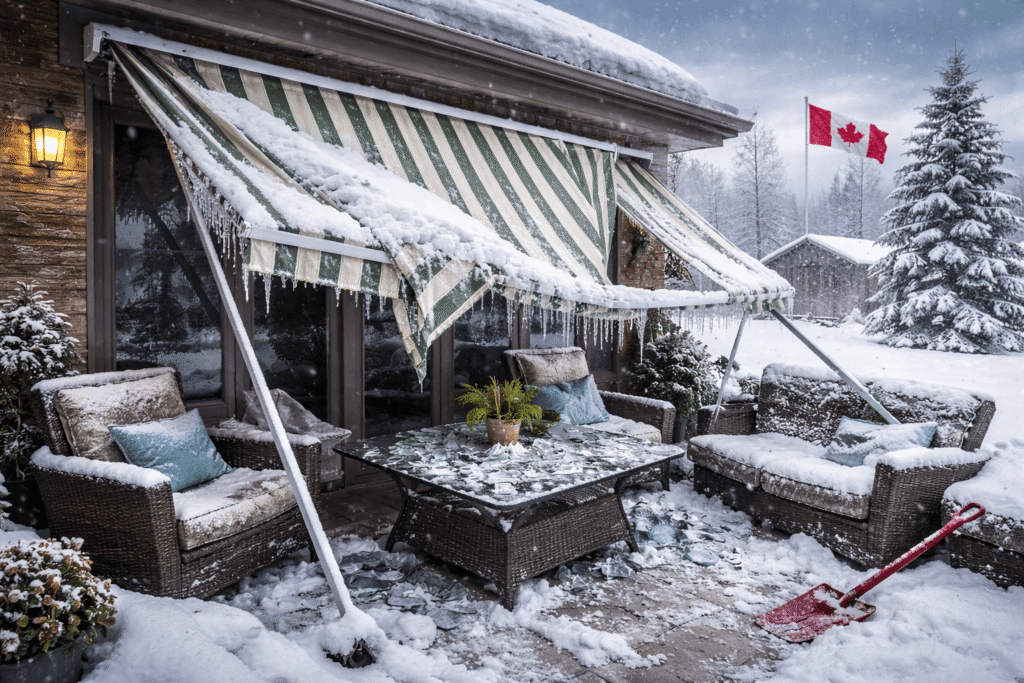
Warping, misalignment, or visible stress points suggest the frame is not rated for consistent load changes caused by wind gusts and temperature variation.
Sign #4: Fabric Fades, Cracks, or Stiffens Too Quickly
UV exposure combined with cold weather accelerates fabric breakdown when materials are not designed for northern climates. Premature fading and stiffness reduce both performance and appearance.
Sign #5: Operation Becomes Difficult in Cold Weather
Resistance during extension or retraction often indicates components that are not suited to low temperatures. Smooth operation should remain consistent throughout the season.
Sign #6: The Awning Must Stay Retracted Too Often
When an awning spends more time closed than open due to weather concerns, its functional value is limited. A properly built system supports frequent use across varied conditions.
Sign #7: Frequent Repairs or Adjustments Are Needed
Recurring service calls usually indicate a mismatch between product design and environmental demands. Ongoing adjustments become costly and inconvenient over time.
Why Standard Patio Awnings Often Fail in Canadian Conditions
Many standard models prioritize sun control while overlooking wind loads, rain management, and cold-weather performance. These limitations become evident after only a few seasons of use.
Features That Indicate a Patio Awning Is Built for Canadian Weather
Key indicators include reinforced aluminum frames, high-tension fabrics, engineered mounting systems, and components tested for temperature resilience. Canadian-made products often better reflect these requirements.
When Repair Is No Longer the Right Solution
Fabric replacement or minor adjustments can temporarily extend the lifespan. However, repeated structural or operational issues usually signal that replacement is the more practical long-term choice.
Choosing a Patio Awning Designed for Canadian Weather
Selecting awnings specifically engineered for Canadian conditions improves durability, usability, and return on investment. Design intent matters as much as appearance.
Built for Canadian Conditions, Not Compromises
Outdoor living should not be limited by avoidable equipment failures. Recognizing these warning signs helps prevent unnecessary frustration and expense. Canadian Shade supplies premium, Canadian-made awning solutions designed to perform reliably across Canadian seasons.
Connect with Canadian Shade to choose a patio awning built for real Canadian weather.