
Protecting loads during forklift handling is a constant concern across warehouses, manufacturing floors, and distribution centers. Even minor contact between bare forks and finished goods can result in scratches, dents, or rejected shipments. That is why many operations rely on forklift fork covers. The most common options include forklift sleeves, forklift socks, and rubber fork covers. Each serves a purpose, but choosing the right one depends on cargo type, environment, and handling frequency.
This guide explains how these options differ and when each delivers the most effective load protection.
Why Fork Protection Matters in Material Handling
Forklift tines are built for strength, not surface protection. Bare steel forks can damage painted metal, finished products, packaged goods, and fragile materials. Over time, even minor damage adds up to rework, returns, and customer dissatisfaction.
Fork protection accessories create a buffer between the forks and the load. They help reduce surface abrasion, improve grip, and limit movement during transport. The key is selecting the protection method that aligns with daily operating conditions.
Overview of Forklift Sleeves, Socks, and Rubber Covers
Fork protection products generally fall into three categories.
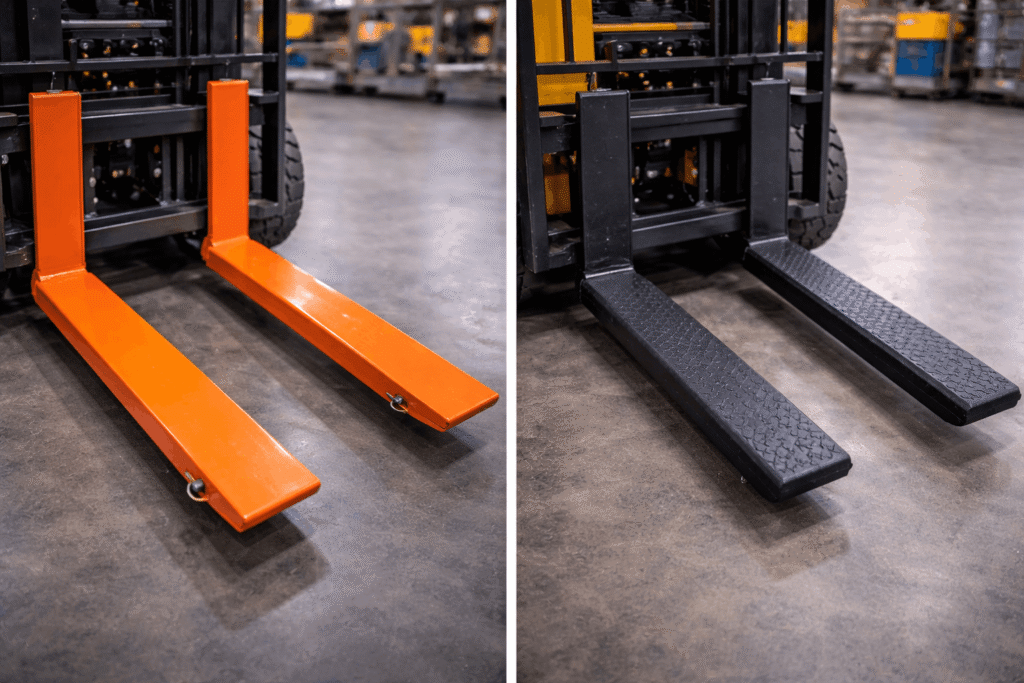
Forklift sleeves are rigid or semi-rigid covers that slide over the fork tines. They are commonly made from reinforced plastic, polyurethane, or fabric-lined materials. Sleeves provide consistent coverage and help protect both the load and the fork itself.
Forklift socks are fabric-based covers, often padded or layered. They offer softer contact surfaces and are frequently used for delicate or finished goods where surface marking is a concern.
Rubber forklift fork covers are made from dense rubber compounds designed to absorb impact and increase friction. These covers provide a firm grip and abrasion resistance, making them suitable for heavier or rougher loads.
Each option addresses load protection differently, which makes comparison important.
Durability and Fit Comparison
Durability varies significantly between these options.
Forklift sleeves tend to offer longer service life when properly sized. Their structured shape maintains consistent coverage and resists tearing during repeated use. Fit is critical, as loose sleeves can shift during lifting.
Forklift socks prioritize softness over durability. While effective for surface protection, they can wear faster in high-cycle operations. Socks may also stretch or loosen over time, requiring frequent replacement.
Rubber forklift fork covers deliver excellent durability in demanding environments. Rubber resists abrasion, moisture, and impact better than fabric options. The heavier construction also helps maintain fit under load, though weight should be considered when selecting covers.
When to Use Each Option
Forklift sleeves work well for general warehouse handling, palletized goods, and operations that need consistent protection without frequent removal.
Forklift socks are best suited for finished metals, painted surfaces, glass, or packaged products where cosmetic damage must be avoided. They are commonly used in lower-volume or specialized handling tasks.
Rubber forklift fork covers are ideal for environments with heavier loads, outdoor exposure, or frequent contact with rough materials. They perform well in manufacturing plants, yards, and distribution centers where grip and durability matter most.
Matching the protection type to the load reduces unnecessary wear and improves handling confidence.
Installation and Cost Considerations
Installation effort differs between options. Sleeves and socks typically slide on and off quickly, making them convenient for changing tasks. Rubber covers may require more effort to install due to their weight and snug fit, but they stay in place once installed.
Cost also varies. Forklift socks usually have the lowest upfront cost but may need more frequent replacement. Sleeves balance cost and longevity, while rubber forklift fork covers often carry a higher initial cost but provide longer service life in demanding applications.
Evaluating total lifecycle cost, not just purchase price, helps justify the right choice.
Conclusion – Choose Protection Based on Cargo and Environment
There is no universal solution for fork protection. Forklift sleeves, forklift socks, and rubber forklift fork covers each serve a purpose based on handling needs. Sleeves offer balanced protection for daily operations, socks protect delicate surfaces, and rubber covers deliver durability and grip in more challenging conditions.
Selecting protection based on cargo type, environment, and usage frequency reduces damage, improves efficiency, and protects both products and equipment. The right forklift protection choice supports smoother material handling and fewer costly interruptions. Murphy Industrial Products, Inc., supplies durable fork protection solutions designed for industrial material handling. Contact us today!