
Industrial laundry operations run on tight schedules where performance and reliability make the difference between meeting demand and facing costly delays. Every piece of equipment must deliver consistent output to meet daily operational demands. When machines show early signs of wear, ignoring them can lead to extended downtime, expensive repairs, or lost productivity.
Proactive laundry equipment maintenance ensures systems continue operating at peak efficiency. Spotting warning signals early not only prevents unexpected breakdowns but also extends the life of industrial machinery. Here are the top signs that equipment requires immediate attention.
1. Unusual Noises During Wash or Dry Cycles
Loud banging, grinding, or high-pitched squealing are strong indicators that internal components may be damaged or misaligned. These noises often signal issues with belts, bearings, or drums. Ignoring these sounds can quickly turn minor problems into major failures.
2. Longer Than Normal Wash and Dry Times
When cycles begin taking longer than expected, it often points to mechanical inefficiencies or worn parts. Extended processing times reduce overall throughput, causing delays in meeting client or operational schedules. Addressing the issue promptly keeps the workflow consistent and dependable.
3. Rising Utility Bills Without Increased Output
A sudden increase in energy or water costs is a red flag. Equipment that requires more power or water to deliver the same results is not operating efficiently. Early intervention during maintenance inspections can help identify faulty heating elements, airflow restrictions, or blocked lines that cause unnecessary utility expenses.
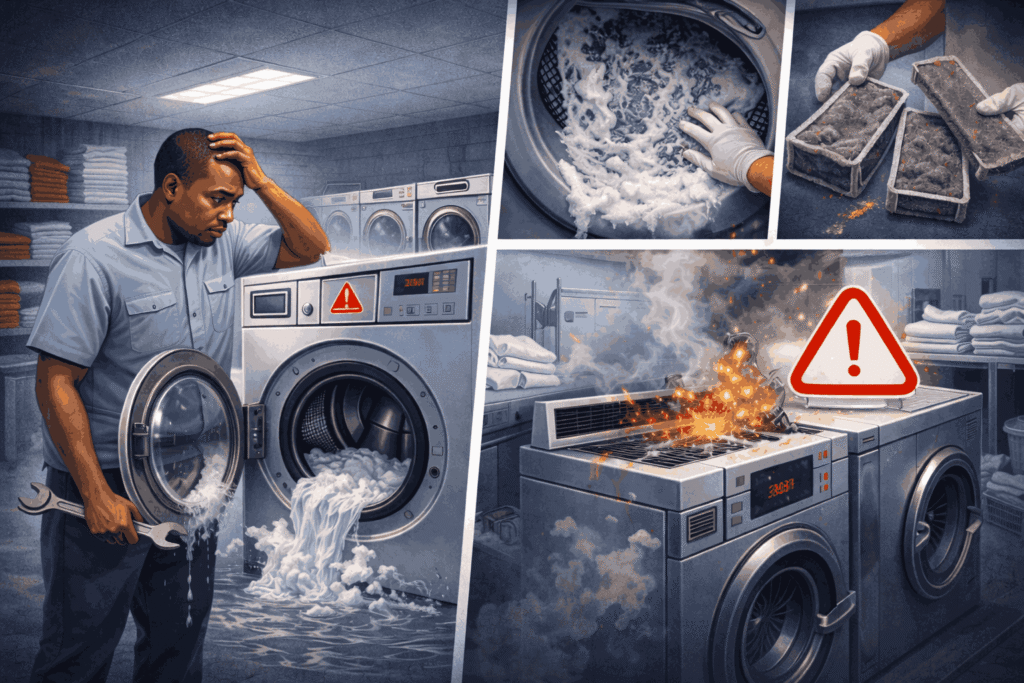
4. Visible Leaks, Excess Lint, or Overheating
Water pooling around machines, lint buildup in unusual areas, or machines running hotter than usual are all signs of trouble. These issues not only compromise performance but also create potential safety hazards. Routine servicing addresses these problems before they escalate into emergencies.
5. Frequent Breakdowns and Emergency Repairs
If equipment requires repeated service calls within short intervals, it is no longer reliable. Frequent breakdowns signal that parts are deteriorating or that the machine has gone too long without preventative care. Planning regular service avoids the disruption and cost of emergency repairs.
6. Decline in Linen Quality After Processing
When linens come out wrinkled, unevenly dried, or with residue, it often indicates malfunctioning components within the equipment. A drop in finishing quality impacts the reputation of any industrial laundering service, making it critical to resolve the root cause quickly.
7. Outdated Equipment Without Recent Servicing
Machines that have not been serviced in years or that are nearing the end of their expected lifecycle carry higher risks of sudden failure. Scheduling assessments ensures that older equipment is still capable of meeting modern performance standards without compromising safety or productivity.
Why Early Maintenance Matters
Recognizing the warning signs of failing equipment is the first step toward preventing costly downtime. From unusual noises to declining linen quality, each signal reinforces the importance of timely inspections, preventative maintenance, and planned servicing to keep industrial laundry operations running efficiently.