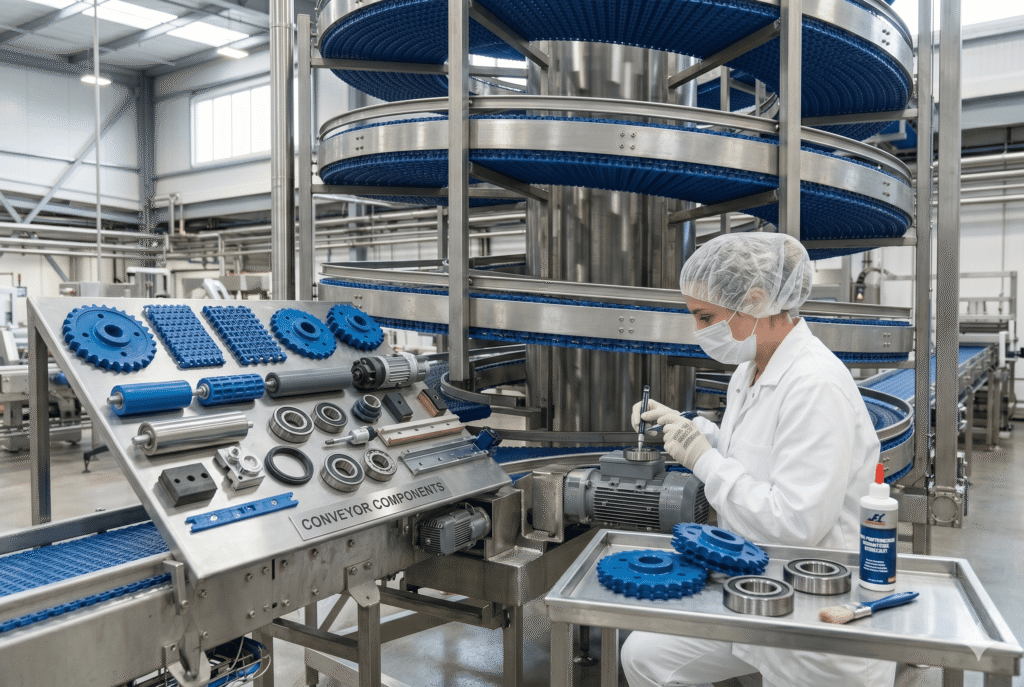

Reliable material handling depends on the condition of critical conveyor components that operate continuously under load. Over time, wear, friction, and environmental exposure affect performance, leading to gradual degradation and eventual replacement. Even well-designed systems require consistent maintenance to ensure smooth operation and prevent production interruptions.
Understanding which belt conveyor parts are most commonly replaced helps facilities plan maintenance strategies more effectively. With proper inspection, material selection, and operating practices, the lifespan of these components can be extended significantly.
1. Conveyor Belts
Conveyor belts are the primary surface for product movement and experience constant friction and load stress. Wear occurs due to abrasion, misalignment, or improper tension.
Regular inspection, proper tracking, and selecting belts suited to the application help extend belt life and maintain consistent performance.
2. Rollers and Idlers
Rollers support the belt’s movement and reduce friction throughout the system. Over time, rollers may wear due to contamination, uneven loading, or bearing failure.
Using sealed rollers and maintaining clean operating conditions can help reduce wear and improve system efficiency.
3. Bearings
Bearings allow rotating components to operate smoothly. These components are highly sensitive to dust, moisture, and lubrication issues.
Routine lubrication and the selection of high-quality sealed bearings help prevent premature failure and reduce maintenance frequency.
4. Drive Motors
Drive motors provide the power required to move conveyor systems. Continuous operation can lead to overheating, electrical wear, or mechanical stress.
Monitoring temperature and ensuring proper load distribution help maintain motor performance and extend service life.
5. Gearboxes
Gearboxes transfer power from motors to conveyor systems. Wear may occur due to inadequate lubrication or excessive loads.
Regular oil checks and proper alignment help reduce mechanical stress and support long-term gearbox performance.
6. Pulleys
Pulleys guide and drive conveyor belts. Over time, wear may develop due to friction, misalignment, or material buildup.
Maintaining proper alignment and cleaning pulley surfaces helps prevent uneven wear and belt damage.
7. Chains and Sprockets
Chains and sprockets are commonly used in specific conveyor systems for power transmission. Wear occurs due to friction, lack of lubrication, and operational stress.
Regular lubrication and alignment checks help maintain smooth operation and reduce component wear.
8. Sensors and Control Components
Sensors and control elements regulate conveyor operation by detecting product movement and system conditions. Failure can occur due to electrical issues or environmental exposure.
Proper installation, calibration, and protection from dust and moisture help maintain reliable system control.
9. Seals and Guards
Seals protect internal components from contamination, while guards provide safety and protect moving parts. Over time, seals may degrade and lose effectiveness.
Routine inspection and timely replacement help maintain both safety and component protection.
10. Fasteners and Structural Components
Fasteners and structural elements maintain system stability. Vibration and continuous operation can loosen bolts or cause structural fatigue.
Regular inspection and tightening of fasteners help maintain system alignment and prevent structural issues.
Proactive Maintenance Strategies to Extend Conveyor Part Life
Maintaining conveyor systems requires a proactive approach that focuses on inspection, proper component selection, and consistent maintenance practices. Identifying early signs of wear helps prevent unexpected failures and supports stable production flow.
Conovey provides engineered conveyor solutions designed to support long-term reliability and efficient material handling. Durable system design, quality components, and integration support help extend the lifespan of critical equipment. Facilities seeking dependable solutions benefit from proper maintenance strategies and high-quality conveyor parts that support consistent operational performance. Connect with Conovey today to maintain conveyor efficiency and reduce downtime.