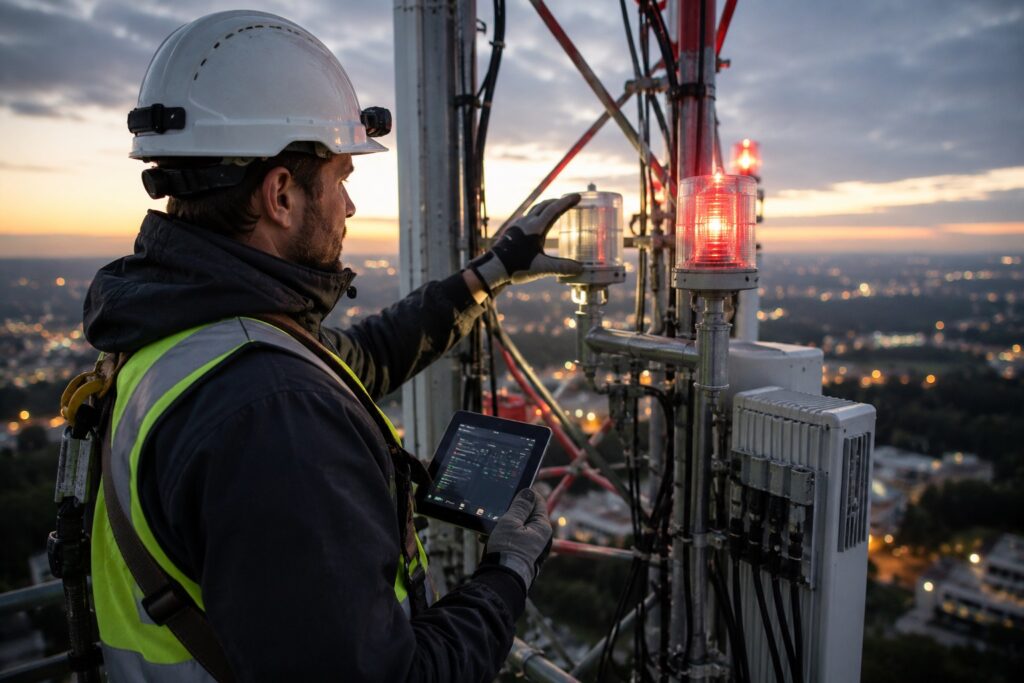

Telecom towers operate in regulated, high-availability environments. Aviation safety, SLA compliance, and uptime protection are non-negotiable. Tower light monitoring systems provide the visibility and automation required to manage this responsibility at scale. Below are five operational reasons these systems are essential for modern telecom infrastructure.
1. Ensures Continuous Aviation Compliance
Obstruction lights must function without interruption. Any failure can expose operators to penalties and safety risks. Manual inspections are not reliable for large networks.
Tower Light Monitoring Systems provide real-time light status updates. Faults trigger instant alerts to centralized dashboards. This supports automated reporting and audit readiness.
By integrating Tower Light Monitoring into remote infrastructure platforms, telecom operators reduce compliance risk while improving response times.
2. Improves Network Uptime and Reliability
A tower light failure can indicate deeper electrical issues. Power instability, controller faults, or battery degradation often appear first in lighting systems.
When connected through a remote monitoring system within telecom tower architecture, monitoring platforms correlate lighting data with power and environmental systems.
This integration supports predictive maintenance. Field teams respond based on data, not assumptions. As a result, downtime is reduced and asset life is extended.
3. Reduces Operational and Maintenance Costs
Routine tower inspections require travel, labor, and scheduling. Across hundreds of sites, costs increase quickly.
Tower Light Monitoring eliminates unnecessary dispatches. Operators receive alerts only when performance thresholds are breached.
Key financial benefits include:
- Reduced truck rolls and fuel costs
- Faster fault isolation and repair cycles
- Improved SLA performance and reduced penalty exposure
- Lower manual inspection overhead
This shift from reactive to data-driven maintenance protects operating budgets.
4. Enables Centralized Visibility Across Multi-Site Networks
Telecom providers manage distributed infrastructure across large regions. Fragmented systems create blind spots.
Modern tower light monitoring systems integrate into unified dashboards alongside HVAC, power, and environmental controls. Operators gain site-level and network-level visibility.
Centralized analytics platforms, powered by AI and machine learning, categorize site health and prioritize alarms. This ensures operational teams focus on high-risk sites first.
With complete visibility, decision-making becomes faster and more strategic.
5. Supports Predictive Analytics and Long-Term Infrastructure Optimization
Tower Light Monitoring is no longer limited to simple fault alerts. Advanced systems convert operational data into measurable business outcomes.
When combined with industrial IoT platforms, monitoring data feeds predictive algorithms. These tools detect patterns in voltage behavior, failure frequency, and equipment wear.
Over time, telecom operators gain:
- Improved asset lifecycle planning
- Better CAPEX forecasting
- Energy efficiency insights
- Reduced risk of unexpected outages
PLC Group provides integrated Tower Light Monitoring Systems as part of its industrial IoT and remote monitoring solutions. Established in 2014 and headquartered in Mississauga, Ontario, PLC Group converts operational data into measurable financial value. Through AI-powered platforms, hardware-software integration, and scalable service models, telecom operators achieve higher reliability, improved ROI, and predictable operating costs.
Strengthen Telecom Infrastructure with Intelligent Monitoring
Tower Light Monitoring is a critical component of resilient telecom infrastructure. It protects compliance, enhances uptime, reduces cost, and supports predictive operations at scale.
Contact PLC Group to learn how advanced Tower Light Monitoring Systems can enhance reliability and operational performance across telecom networks.