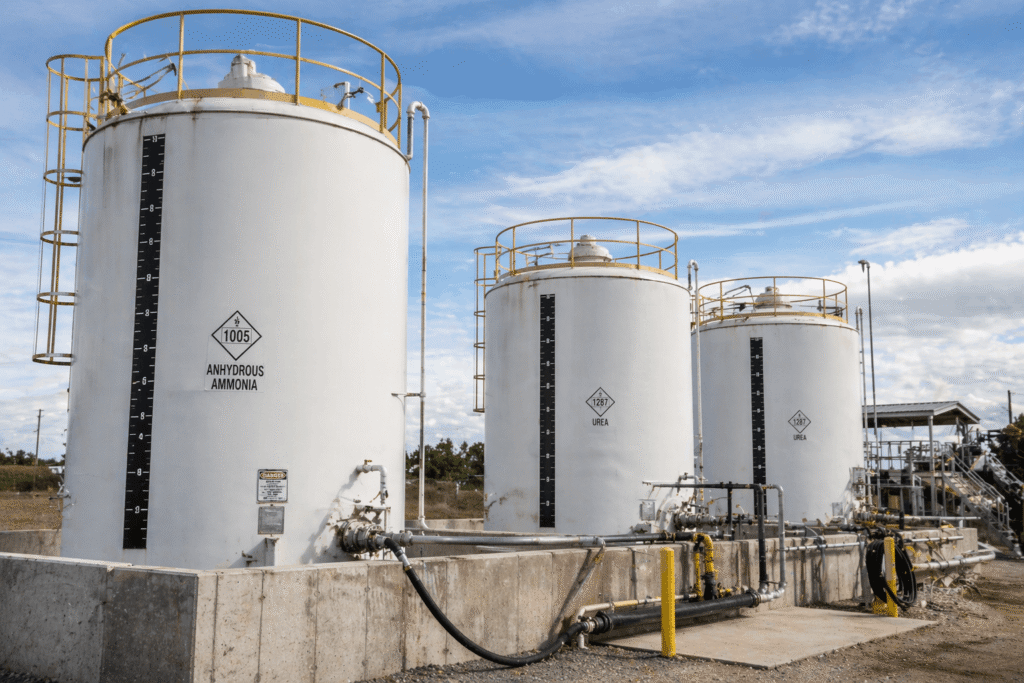

Fertilizer storage plays a direct role in maintaining product quality, operational efficiency, and environmental safety. Improper tank design can lead to contamination, chemical degradation, and equipment damage. Agricultural and industrial operations must evaluate storage systems carefully to ensure consistent performance. Engineered fertilizer storage tanks help maintain chemical stability while supporting efficient handling and distribution.
At Belding Tank Technologies, storage systems are designed to meet the specific demands of agricultural applications, including compatibility with nutrient-rich solutions and long-term durability.
1. Chemical Compatibility With Urea and Liquid Blends
Liquid fertilizers often contain urea, ammonium nitrate, and other nutrient blends that can react with incompatible materials. Storage systems must be designed to prevent chemical reactions that may degrade the product or damage the tank.
A properly engineered urea storage tank uses materials and resin systems that resist chemical interaction. This ensures that fertilizers retain their composition and effectiveness throughout storage. Compatibility also reduces the risk of contamination that could affect crop performance.
2. Tank Material Selection for Corrosion Resistance
Corrosion remains one of the most significant challenges in fertilizer storage. Many liquid fertilizers contain compounds that accelerate the deterioration of untreated metal surfaces.
Liquid fertilizer storage tanks made from fiberglass-reinforced plastic offer strong resistance to corrosion and chemical exposure. Unlike steel, fiberglass does not require coatings that may degrade over time. This reduces maintenance requirements and extends service life.
Material selection must consider both the fertilizer’s chemical composition and the environmental conditions at the tank’s installation site.
3. Venting and Pressure Management Systems
Fertilizer storage tanks must manage internal pressure caused by temperature changes and chemical activity. Improper venting can lead to pressure buildup, which may damage tank components or fittings.
Engineered venting systems allow gases to escape safely while preventing contaminants from entering the tank. Pressure management systems also protect structural integrity and support safe operation during filling and discharge.
Well-designed fertilizer storage tanks include venting solutions that align with operational requirements and environmental conditions.
4. Temperature Control and Insulation Requirements
Temperature fluctuations can impact fertilizer stability. Cold conditions may cause certain solutions to crystallize, while high temperatures can accelerate chemical breakdown.
Tank designers evaluate climate conditions and storage duration when developing liquid fertilizer storage tanks. Insulation, shading, or heat maintenance systems may be incorporated to maintain stable internal temperatures.
These features help preserve fertilizer quality and prevent operational issues caused by temperature-related changes.
5. Mixing, Drainage, and Transfer Components
Efficient fertilizer storage requires systems that support consistent mixing and complete drainage. Nutrient solutions may separate or settle over time, affecting application accuracy.
Key components include:
- Mixing systems that maintain uniform solution composition
- Sloped bottoms or drain ports for complete product removal
- Transfer connections designed for efficient loading and unloading
- Reinforced fittings that handle operational stress
These features ensure that urea storage tank systems support consistent fertilizer distribution and reduce waste.
6. Compliance and Environmental Safeguards
Agricultural operations must comply with environmental regulations governing chemical storage. Storage systems must prevent leaks, spills, and contamination of surrounding soil or water sources.
Compliance considerations include:
- Secondary containment systems
- Leak prevention and monitoring features
- Proper site preparation and tank placement
- Documentation for inspections and regulatory requirements
Engineered fertilizer storage tanks support compliance by incorporating safety features that protect both the environment and facility operations.
Conclusion
Effective fertilizer storage requires careful attention to chemical compatibility, material selection, and system design. Properly engineered liquid fertilizer storage tanks maintain product quality, reduce operational risks, and support efficient agricultural processes.
Facilities that invest in reliable urea storage tank systems benefit from improved performance, reduced maintenance, and stronger environmental protection.
For engineered fertilizer storage solutions designed for demanding applications, contact Belding Tank Technologies.