
Electric vehicle ownership is accelerating across Ontario as more homeowners look for practical, long-term transportation solutions. While purchasing an EV is straightforward, preparing a home for charging requires more planning.
A proper residential EV charger installation involves electrical capacity checks, safety protections, and strict adherence to provincial regulations. Understanding what’s required before installation helps homeowners avoid delays, safety risks, and unexpected system limitations.
EV Adoption Is Growing—Is Your Home Ready?
As EV adoption grows, many homes are being asked to support electrical loads they were never designed for. A charging station draws sustained power for hours at a time, making it very different from standard household appliances. Before committing to an EV home charging station installation, homeowners should understand how their existing electrical system will respond to this added demand.
Older homes, especially those built before the 1990s, may require upgrades to accommodate modern charging equipment safely.
Types of Home EV Chargers and Compatibility
Residential EV chargers generally fall into two categories:
- Level 1 chargers (120V):
These use standard outlets and offer slow charging. While simple, they are often impractical for everyday driving. - Level 2 chargers (240V):
These require dedicated circuits and professional installation. They charge vehicles significantly faster and are the preferred option for most Ontario homeowners.
Compatibility depends on the vehicle, charging speed expectations, and available electrical capacity. A licensed electrician confirms which charger type best suits both the vehicle and the home.
Power Requirements and Electrical Panel Considerations
One of the most overlooked steps in home car charger installation is verifying panel capacity. Level 2 chargers typically require a dedicated 240V circuit with a range of 30 to 60 amps.
A licensed electrician will:
- Perform a load calculation
- Check available breaker space
- Assess grounding and bonding
- Determine whether a panel upgrade is needed
Homes with 100-amp panels may struggle to support additional loads without upgrades or load management systems. Addressing this early prevents tripped breakers and future limitations.
Ontario Permit and Safety Rules for Charger Installs
All residential EV charger installation projects in Ontario require an Electrical Safety Authority (ESA) permit. This ensures the installation meets the Ontario Electrical Safety Code.
The process typically includes:
- Permit application by a licensed contractor
- Installation of dedicated circuits and breakers
- Grounding and GFCI protection verification
- ESA inspection and approval
Unpermitted work may result in inspection failures, insurance issues, or complications during home resale.
Indoor vs Outdoor EV Charger Placement
Charger placement impacts safety, usability, and long-term durability.
Indoor installations (garages):
- Offer weather protection
- Allow shorter wiring runs
- Simplify maintenance
Outdoor installations:
- Require weatherproof chargers
- Use outdoor-rated conduit and fittings
- Must account for snow, moisture, and temperature changes
A professional installer evaluates placement options to ensure compliance, accessibility, and efficient wiring routes during EV home charging station installation.
Why Hiring a Licensed Installer Matters
Ontario law requires EV charger installations to be completed by licensed electrical contractors. A licensed professional ensures:
- Proper permit filing
- Correct wire sizing and breaker selection
- Safe grounding and bonding
- Compliance with manufacturer requirements
- ESA inspection approval
DIY or unlicensed work can lead to overheating, system damage, or denied insurance claims. Professional installation protects both the home and the vehicle.
How Professionals Install EV Charging Stations Safely
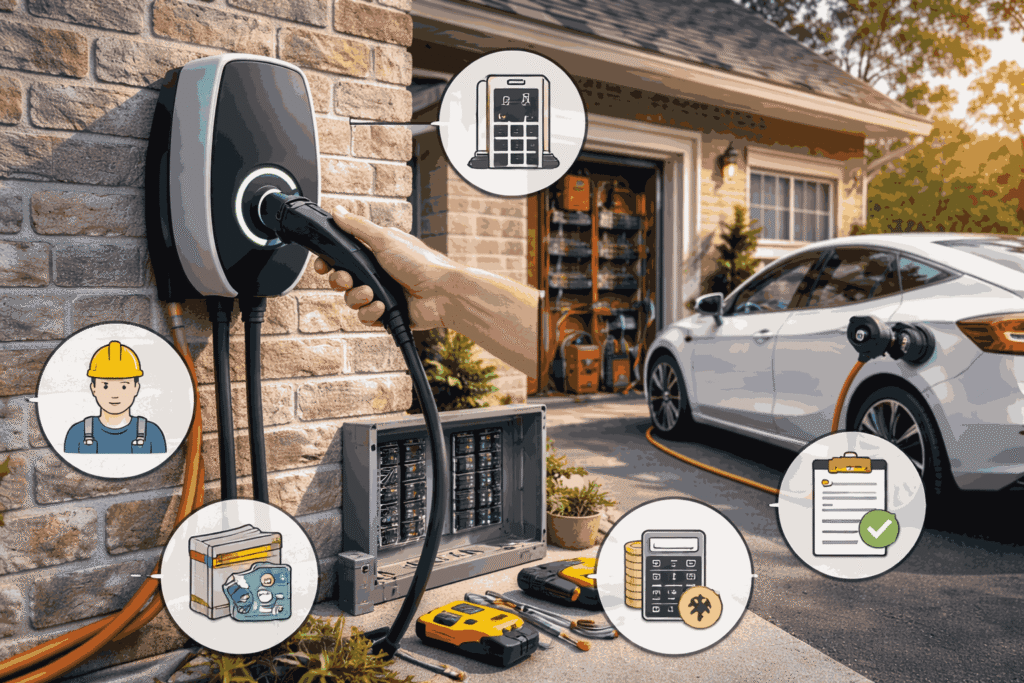
Professionals provide end-to-end solutions for EV charger projects across the GTA. Our licensed electricians manage every step of residential EV charger installation, including:
- Panel and load assessments
- Dedicated circuit installation
- Indoor or outdoor charger mounting
- GFCI and safety device installation
- ESA permit filing and inspection coordination
Our structured approach ensures each installation is safe, compliant, and built to support long-term EV ownership.
A Smooth Installation Starts With a Licensed Electrician
Installing a residential EV charger is an investment in convenience, efficiency, and future mobility. Proper planning—combined with licensed expertise—ensures the system performs safely and reliably for years to come.
From panel evaluation to final inspection, professional oversight is essential. For dependable home EV charger installation, schedule a licensed assessment and compliant installation.