
Vertical material movement is one of the most underestimated constraints on active construction sites. When materials fail to reach working levels on time, crews wait, installation windows shrink, and staging areas become congested. These inefficiencies ripple across trades, affecting productivity, safety, and schedule control. As structures rise and projects become denser, vertical logistics often determine whether progress accelerates or stalls.
On modern construction sites, vertical material flow cannot be treated as a secondary concern. This is where the material lift becomes a critical component of construction planning. Purpose-built for controlled vertical transport, these systems replace improvised methods with predictable, repeatable material movement that supports coordinated site operations from early structure through final fit-out.
What are Material Lifts?
A material lift is a vertical transport system designed specifically for moving construction materials rather than personnel. These systems focus on stability, controlled travel, and repetitive lifting under heavy-duty conditions. Unlike passenger-oriented equipment, material-focused systems prioritize structural strength, load containment, and consistent stopping accuracy.
A material handling lift is engineered to operate reliably through thousands of cycles while maintaining defined load limits. Its role is functional and operational, supporting material flow rather than comfort. This distinction makes material lifts essential on sites where volume, weight, and frequency of movement exceed what manual or temporary solutions can safely manage.
The Role of Material Lifts on Construction Sites
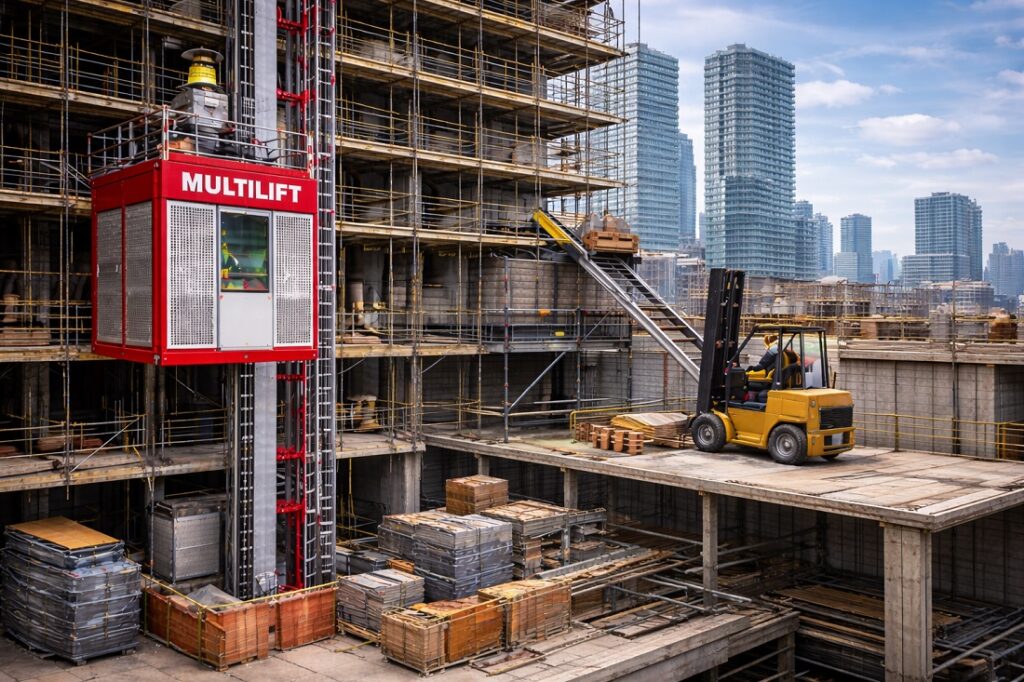
Construction sites function as logistical systems. Materials must arrive at the correct location, in the correct quantity, and at the correct time. A material lift acts as the backbone of this vertical logistics chain, connecting ground-level staging with active work zones across multiple floors.
By centralizing material movement, these systems reduce reliance on cranes for routine transport and limit the need for manual carrying. This role becomes increasingly important as buildings rise, as vertical travel takes longer and requires more effort. A material handling lift helps maintain a consistent flow even as travel distances increase.
Common Types of Materials Moved Using Material Lifts
Construction materials vary widely in form and handling requirements. A material handling lift commonly transports drywall bundles, masonry units, steel framing, piping assemblies, HVAC components, electrical panels, packaged fixtures, and interior finishing materials. These systems are designed to accommodate pallets, carts, and customized load arrangements.
The ability to handle mixed loads safely allows a material lift to support multiple trades simultaneously. This versatility reduces bottlenecks and minimizes the need for separate lifting solutions for different material types.
How Material Lifts Improve Vertical Material Handling
Improved material handling starts with predictability. A material lift operates on fixed rails or guide systems with defined load ratings and travel paths. This consistency eliminates the variability associated with makeshift lifting methods and manual transport.
Predictable operations allow site teams to schedule deliveries more accurately, plan staging areas efficiently, and reduce double-handling. Over time, this reliability improves overall coordination across trades and minimizes interruptions caused by delays in material access.
Productivity Benefits of Material Lifts
Productivity gains from a material handling lift are cumulative. Each reduced trip, shortened wait time, and eliminated handling step saves labor minutes that compound throughout the day. Crews spend more time installing and less time transporting.
These benefits are most evident during peak construction phases. When multiple trades require materials simultaneously, a material lift helps prevent congestion and idle time. The result is steadier progress and better utilization of available labor.
Safety Advantages Over Manual and Improvised Methods
Manual handling and improvised lifting methods introduce significant risk. Overloaded platforms, unstable rigging, and inconsistent operation contribute to injuries and near misses. A material lift replaces these risks with engineered controls.
Enclosed platforms, defined load limits, controlled acceleration, and secure landing interfaces all contribute to safer operation. A material handling lift also reduces repetitive strain injuries by limiting the need for manual carrying, especially over long vertical distances.
Load Capacity and Performance Considerations
Load capacity is more than a specification. It defines how reliably the system supports daily site operations. A material handling lift must account for the weight of the material, pallets, carts, and any handling accessories. Underestimating these factors leads to overuse and accelerated wear.
Selecting appropriate capacity ensures the material lift operates within safe limits, maintains performance consistency, and reduces unplanned downtime. Proper capacity planning also supports compliance with inspection and certification requirements.
Height, Speed, and Throughput Impact
As buildings increase in height, vertical travel time becomes a limiting factor. A material lift designed for taller structures maintains controlled speed and smooth stopping across the full travel path. Throughput depends on the balance between speed, load size, and cycle frequency.
Systems that maintain consistent cycle times support higher throughput during peak demand. This capability becomes critical when multiple floors are active simultaneously, and material demand is continuous.
Integration With Construction Sequencing
Construction sequencing relies on material availability. Integrating a material-handling lift into the project schedule ensures materials arrive in sync with installation activities. This alignment reduces the need for temporary storage and repeated handling.
Sequencing integration also supports better coordination between structural, mechanical, and finishing phases. A material lift enables smoother transitions by maintaining consistent access as project focus shifts across trades.
Temporary vs Long-Term Use of Material Lifts
Not all projects require the same deployment strategy. Some sites benefit from temporary installation during early structural phases, while others rely on extended use through interior completion. A material lift can be configured for short-term or long-term operation depending on the project scope.
Understanding duration helps determine service requirements, maintenance planning, and system configuration. Both temporary and long-term use benefit from early planning and clear performance expectations.
Compliance and Inspection Considerations
Construction sites in Canada and the USA are subject to strict regulatory oversight. A material handling lift must meet applicable safety standards, load testing protocols, and inspection requirements. Documentation plays a critical role in maintaining operational continuity.
Routine inspections, maintenance records, and load verification help prevent shutdowns and enforcement actions. A compliant material lift supports uninterrupted progress and audit readiness.
Common Mistakes When Using Material Lifts
Common mistakes include underestimating peak load demand, ignoring dynamic forces during start-up and shutdown, and failing to adjust usage as the project evolves. These oversights reduce the effectiveness of a material lift and increase the likelihood of downtime.
Clear operating procedures, proper training, and regular reassessment help avoid these issues and maintain consistent performance.
When material lifts Become Essential Rather Than Optional
As projects span multiple stories and material volumes increase, manual handling becomes inefficient and unsafe. At this point, a material handling lift transitions from convenience to necessity.
This shift often occurs earlier than expected, particularly on dense urban sites or projects with aggressive schedules. Recognizing this transition early allows teams to plan deployment proactively rather than reactively.
Choosing the Right Material Lift for Your Project
Selecting the right system requires evaluating building height, material types, daily cycle volume, and site constraints. Matching these factors to system capability ensures the material lift supports real-world demand rather than theoretical use.
Early evaluation also allows integration with other vertical access systems, improving overall site logistics.
Cost vs Efficiency: Understanding the True Value of Material Lifts
While initial cost is often the most visible factor, efficiency determines true value. Reduced labor hours, fewer delays, improved safety, and predictable scheduling all contribute to long-term savings.
A well-specified material handling lift protects productivity and minimizes indirect costs that often exceed equipment investment over the life of the project.
Material Lifts as a Foundation of Efficient Construction Logistics
Efficient construction logistics depend on controlled, predictable vertical material movement. Without proper planning, congestion, delays, and safety risks compound as projects progress. Strategic deployment of a material lift establishes a stable foundation for coordinated workflows and sustained productivity.
UCEL Inc. provides engineered vertical access solutions designed for demanding construction environments across Canada and the USA. For projects requiring a reliable material elevator that supports safe, efficient material handling, connect with UCEL Inc. to plan vertical logistics with confidence and long-term performance in mind.