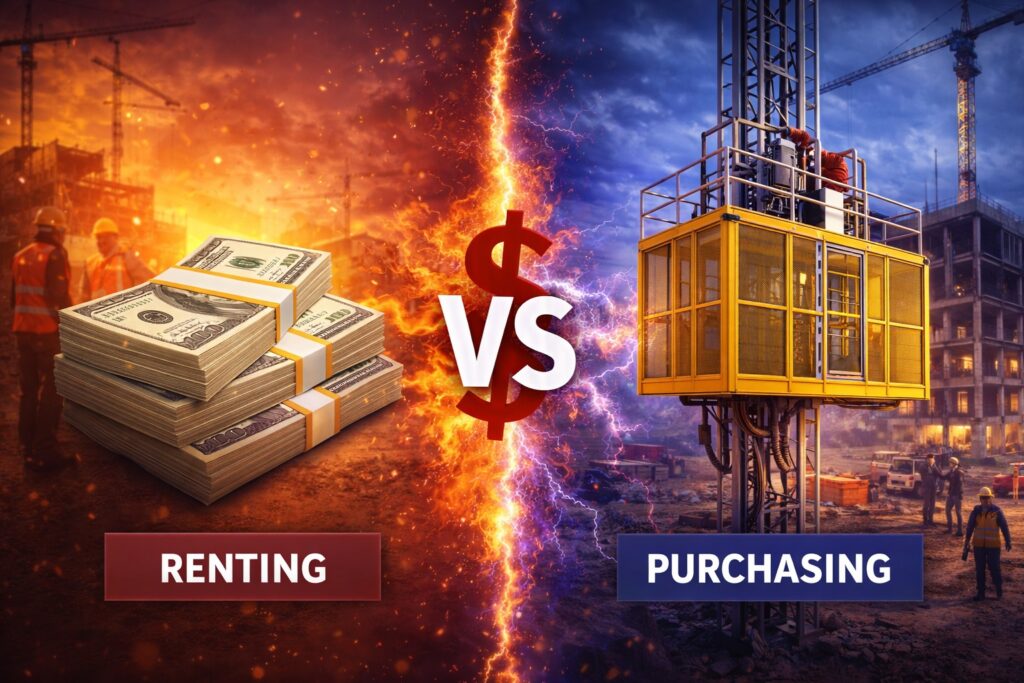

Major construction projects operate on narrow margins and strict timelines. Capital allocation decisions influence not only balance sheets but also operational flexibility and risk exposure. Selecting whether to rent or purchase a construction buck hoist is one of those decisions that can either protect profitability or quietly erode it over time.
The financial structure behind a construction buck hoist affects maintenance responsibility, utilization rates, and long-term asset management. A misstep at this stage can restrict liquidity, reduce adaptability, and create avoidable strain during critical project phases.
Understanding the Case for Renting
Renting a construction buck hoist provides immediate access to equipment without a large upfront capital investment. This approach preserves cash flow, allowing it to be redirected to materials, labor, or other operational priorities.
Rental agreements often include technical support and maintenance coverage. For projects with defined timelines, renting reduces long-term ownership obligations. When demand fluctuates between sites, renting a construction buck hoist provides flexibility without asset storage or resale concerns.
However, extended rental durations may accumulate high costs. Evaluating project length and frequency of use is essential before committing to a rental structure.
Understanding the Case for Purchasing
Purchasing a construction buck hoist converts equipment into a long-term asset. For contractors with recurring high-rise projects, ownership may reduce cost per use over time. Capital investment can create predictable availability without dependence on seasonal rental demand.
Ownership also enables direct control over maintenance scheduling and equipment configuration. However, purchasing ties up capital and transfers full responsibility for servicing, inspections, and compliance. A construction buck hoist that remains idle between projects generates depreciation without a productivity return.
1. Cost Comparison Beyond the Surface
Initial pricing does not reveal the full financial picture. Renting a construction buck hoist may appear cost-effective for shorter builds, but cumulative rental fees can exceed the purchase price over extended periods.
Purchasing requires upfront capital, ongoing maintenance expenses, and storage logistics. Insurance and regulatory compliance add further financial layers. The true comparison depends on lifecycle cost analysis, expected utilization, and projected project pipeline across Canada and the USA.
2. Project Duration and Utilization Considerations
Short-term or single-phase developments often favor rental arrangements. A construction buck hoist rented on a defined schedule reduces the risk of idle time once the project concludes.
Long-term multi-phase builds or contractors with steady project volume may benefit from ownership. Consistent deployment of a construction buck hoist across multiple sites improves asset efficiency. Utilization forecasting should be grounded in confirmed contracts rather than projected opportunities.
3. Risk and Flexibility Factors
Market volatility, regulatory updates, and shifting project timelines create uncertainty. Renting a construction buck hoist allows adjustment if scope changes or equipment requirements evolve.
Ownership exposes investors to market downturns and fluctuations in resale value. Equipment must meet ongoing safety standards, and upgrades may be necessary to maintain compliance. Evaluating flexibility alongside cost prevents financial strain during unpredictable market cycles.
Align the Financial Strategy with Project Demands
A rushed decision on a construction buck hoist can limit operational flexibility and inflate long-term costs. Rental may protect liquidity during uncertain timelines, while ownership can deliver value for contractors with sustained high utilization. The wrong choice can reduce margins and disrupt productivity.
UCEL Inc. provides engineered construction hoist solutions designed for demanding job sites across Canada and the USA. Do not allow a financial miscalculation to affect performance and profitability. Consult UCEL Inc. today to determine the right strategy for securing a construction buck hoist that aligns with project goals and protects long-term results.