
Heavy-duty conveyor systems subject mechanical components to continuous stress. Among them, the pulley plays a key role in maintaining belt motion, controlling tension, and transmitting power. When pulleys fail, conveyor performance can quickly decline, leading to downtime and increased maintenance costs.
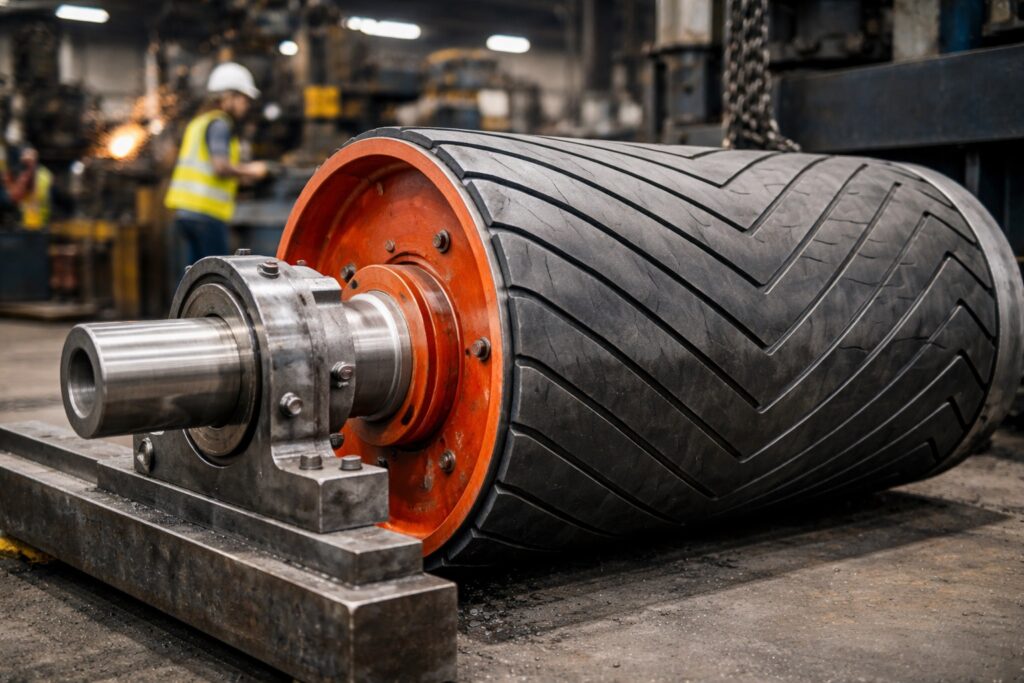
Several engineering factors influence pulley durability. Shell thickness, shaft diameter, end disc reinforcement, and lagging materials all contribute to structural strength. In high-load environments, these features help pulleys distribute tension forces evenly and maintain stable rotation.
Common issues such as shaft fatigue, shell deformation, and lagging wear may appear when pulleys operate beyond their design limits. Proper specification and system design help reduce these risks.
Industrial facilities across the United States rely on well-engineered belt conveyor pulleys to support consistent material flow. Understanding pulley performance helps operations teams maintain reliable conveyor systems under demanding conditions. Read more