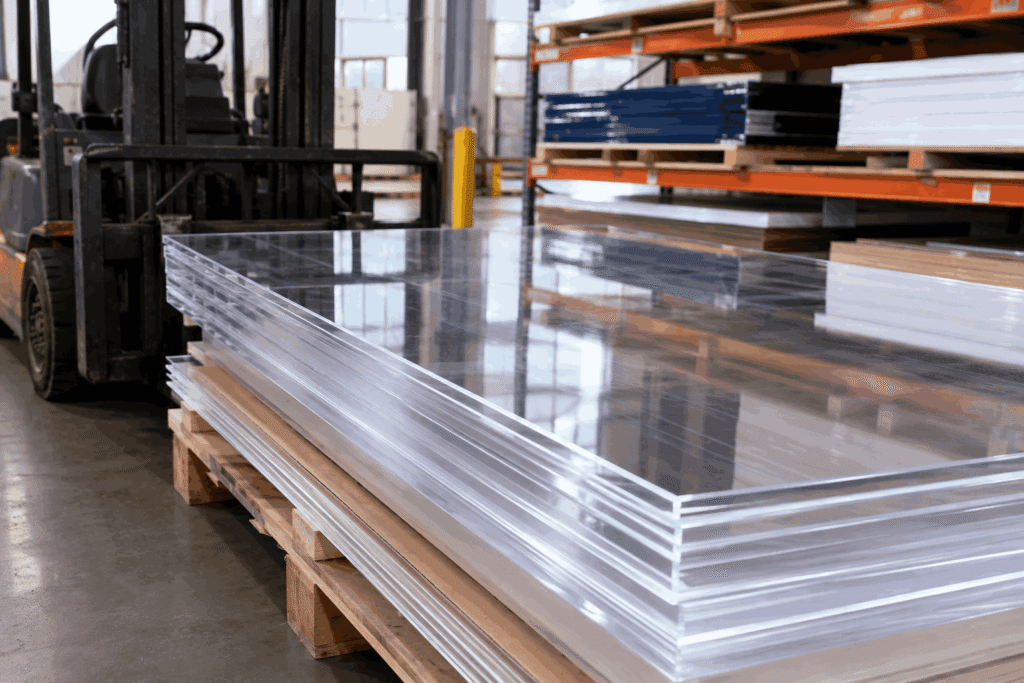

Procurement teams relying on overseas acrylic supply chains often absorb hidden costs, including transit delays, minimum order constraints, and inventory uncertainty. Sourcing acrylic sheets in Toronto helps reduce those risks by placing material availability closer to fabrication schedules. For fabrication, signage, construction, and manufacturing projects, regional sourcing supports better planning, shorter replenishment cycles, and more predictable production timelines.
Shifting Toward Regional Supply Chains
Post-pandemic supply chain disruption has increased interest in regional distribution models across North American manufacturing. Procurement leaders are reviewing sourcing strategies to reduce exposure to port congestion, international freight delays, and long-distance material uncertainty.
For fabricators, this shift supports shorter lead times and more reliable project scheduling. Access to regional material inventory can help reduce production interruptions caused by delayed imports or inconsistent supplier availability.
People Also Ask
Why should fabricators source acrylic sheets in Toronto?
Fabricators may source acrylic sheets in Toronto to reduce freight delays, improve material availability, and support tighter production schedules through regional distribution.
What is the difference between cast and extruded acrylic sheets?
Cast acrylic is often selected for optical clarity and precision applications, while extruded acrylic offers consistent thickness and is suitable for high-volume cutting, forming, and general fabrication.
Just-in-Time Purchasing Benefits
Local inventory supports just-in-time purchasing by reducing the need to carry large safety stock. This helps fabrication shops manage working capital while keeping material access aligned with current project requirements.
Commercial fabrication teams can improve turnaround when acrylic plastic sheets are available through regional distribution channels. This approach supports tighter project schedules, partial-order flexibility, and better control over material flow.
Supply Chain Risks When Importing Acrylic Plastic Sheets
Importing acrylic materials can introduce risks that are not always visible in a basic landed-cost calculation. Freight volatility, customs clearance delays, documentation gaps, and inconsistent material availability can affect production planning.
For procurement managers, these issues create downstream challenges. A delayed shipment can affect cutting schedules, fabrication timelines, installation dates, and client delivery commitments.
Freight Volatility and Geopolitical Disruptions
International shipping costs can shift quickly due to carrier capacity, port congestion, labour disruptions, fuel costs, and geopolitical instability. These variables can make offshore sourcing difficult to forecast accurately.
Regional sourcing reduces reliance on ocean freight and long-distance transit. This helps remove a major variable from the project timeline, especially for fabricators working with fixed installation or production deadlines.
Material Quality and Compliance Concerns
Acrylic used in food contact, medical, display, signage, or consumer-facing applications may require clear documentation and reliable material traceability. Long international supply chains can make certification review and lot consistency more difficult.
Local distributor relationships allow procurement teams to review material data sheets, confirm certifications, and verify grade suitability before production begins. Johnston Industrial Plastics Limited supports this process through technical product knowledge and material documentation practices.
How to Select the Right Acrylic Sheets for Your Project
Material selection determines project performance before cutting, machining, forming, or installation begins. The grade, forming method, optical clarity, and surface quality of acrylic panels in Canada fabricators specify must align with the intended application.
A mismatch between material type and end-use conditions can lead to cracking, poor finish quality, tolerance problems, or rework. Proper specification helps reduce waste and supports consistent fabrication results.
Evaluating Cast Versus Extruded Grades
Cast acrylic is often selected where optical clarity, surface quality, and dimensional performance are important. It is commonly used for display applications, medical components, protective covers, and precision-fabricated parts.
Extruded acrylic provides consistent sheet thickness and can be suitable for high-volume cutting, forming, and general fabrication applications. The right choice depends on light transmission requirements, machining method, forming process, tolerance needs, and end-use exposure.
Assessing Sustainability and Recyclability
Material selection increasingly includes sustainability and end-of-life considerations. Fabricators working on retail, architectural, display, and industrial projects may need recyclable materials or documentation that supports environmental reporting.
Selecting a distributor that can provide product information, grade details, and recyclability guidance helps procurement teams meet project requirements more effectively. This is especially useful when material documentation forms part of client or compliance reporting.
Partnering with a Local Distributor
Working with a regional distributor can reduce freight costs, shorten replenishment timelines, and improve order flexibility. It can also support better communication between procurement teams, fabricators, and technical material specialists.
Johnston Industrial Plastics Limited supplies acrylic sheet materials for industrial, fabrication, signage, and construction applications. Contact Johnston Industrial Plastics Limited to confirm current material availability, thickness options, and suitability for specific project requirements.
Machining and Fabricating Acrylic Panels to Canadian Standards
Fabricating acrylic panels for Canadian projects requires material consistency, process control, and reliable grade selection. Inconsistent incoming material can affect machining quality, edge finish, forming performance, and dimensional accuracy.
A stable supply relationship helps reduce these risks. Repeat orders from a consistent distributor can support better lot control, predictable fabrication performance, and improved quality assurance across production runs.
Precision Machining and Custom Fabrication Requirements
Applications such as equipment guards, electronics housings, displays, signage components, and medical device enclosures require acrylic materials with suitable mechanical and optical properties. Material inconsistency can affect tolerance control and finished-part quality.
Processes such as CNC machining, laser cutting, polishing, bending, and vacuum forming require careful grade selection. Using pre-specified, consistent-grade acrylic helps support repeatable results across small-batch and high-volume fabrication.
Streamlining the Production Workflow
Access to regional acrylic inventory can reduce the time between design approval, material sourcing, fabrication, and quality control. This is especially important for prototype development, replacement components, and time-sensitive production work.
Fabricators can also benefit from the ability to source smaller quantities of specific acrylic grades without committing to larger offshore minimums. This flexibility supports faster iteration, lower inventory burden, and improved production planning.
Securing Reliable Acrylic Sheets for Future Builds
Long-term supply reliability is an important procurement factor. Fabricators and project managers benefit from supplier relationships that support repeat orders, consistent material availability, and clear technical communication.
Regional supply partnerships can also help teams plan for future builds. This includes reviewing thickness requirements, sheet formats, grade suitability, compliance needs, and expected usage volumes before urgent material demand arises.
Leveraging Distributor Logistics Support
Regional distributors can support more practical logistics planning than distant suppliers. Smaller, more frequent orders may help align inventory with actual production demand instead of forcing over-purchasing to justify freight costs.
For procurement teams managing multiple active projects, this can improve cash flow and reduce excess stock. It can also reduce storage pressure in fabrication facilities where space is already allocated to equipment, work-in-progress materials, and finished components.
Next Steps for Your Material Sourcing Strategy
Local sourcing can support lower freight exposure, better material planning, shorter replenishment cycles, and reduced production delays. For fabricators, designers, engineers, and procurement teams, these advantages become especially important when project timelines are fixed and material specifications must be maintained.
Contact Johnston Industrial Plastics Limited to discuss regional material support and how sourcing acrylic sheets in Toronto can help support project timelines, inventory planning, and fabrication requirements.