
Manufacturing delays rarely begin with a major failure. In many cases, they start with inconsistent weld quality, alignment problems, or poor process control. These issues gradually increase operational costs, disrupt timelines, and create avoidable production setbacks.
For businesses relying on metal components and simple electromechanical assemblies, selecting the right welding partner is critical. Reliable welding and fabrication services help maintain dimensional consistency, improve repeatability, and support stable production outcomes.
Professional vendors play an important role in supporting industries that require strict quality control. They help avoid hidden inefficiencies through rework, material waste, and inconsistent quality standards.
- Distortion Issues Require Better Welding and Fabrication Services
One of the clearest signs that specialized support is needed involves excessive material distortion during fabrication.
Warping, buckling, and alignment problems usually indicate:
- Poor welding technique
- Incorrect heat management
- Inadequate fixturing methods
- Improper weld sequencing
Even small distortions can create major downstream issues during machining or assembly.
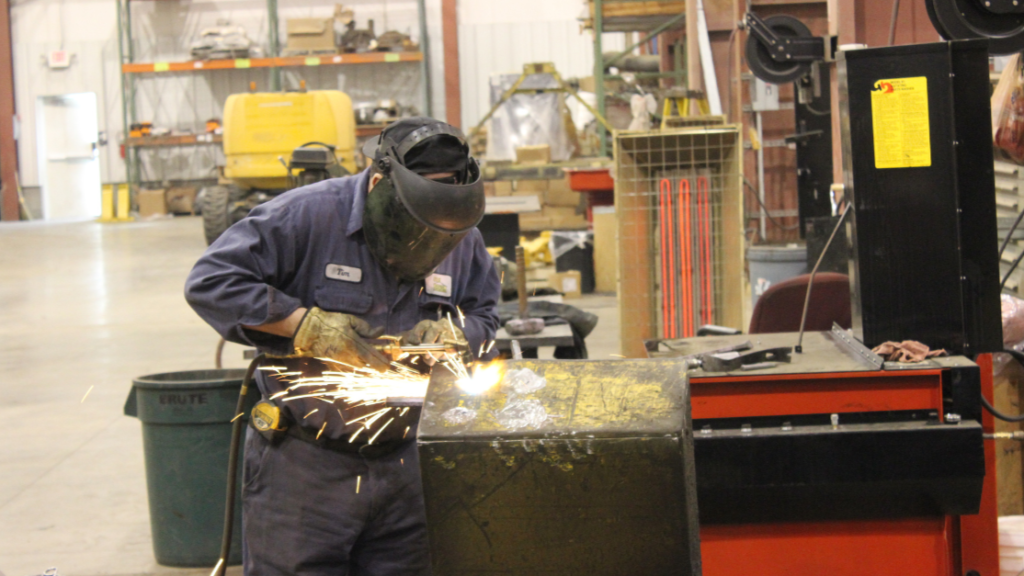
Reliable welding and fabrication services use controlled fabrication methods to reduce stress on materials throughout production. Proper sequencing helps distribute heat more evenly, preventing structural movement during the welding process.
An operational example includes adjusting weld progression patterns to minimize buckling in fabricated metal enclosures. This approach improves dimensional accuracy and reduces the need for secondary corrections.
For businesses producing simple assemblies, stable alignment is essential. Poor fabrication practices often lead to inconsistent fits, delayed integration, and higher labour costs.
Working with experienced vendors helps eliminate these recurring production issues before they affect larger manufacturing schedules.
2. Inconsistent Quality From Welding Fabrication Companies
Inconsistent output is another major indicator that fabrication processes require improvement.
Fluctuating weld quality usually points to a lack of standardized manufacturing procedures. Problems may include:
- Uneven weld penetration
- Surface inconsistencies
- Dimensional variation
- Repeated defects across batches
Over time, these inconsistencies reduce operational efficiency and increase inspection requirements.
Across the manufacturing sector, buyers are increasingly moving away from vendors that fail to maintain predictable quality standards. Companies now prioritize repeatability because inconsistent fabrication creates unnecessary production interruptions.
Specialized welding and fabrication companies establish structured quality control processes to improve consistency at every stage of production.
This includes:
- Standardized welding procedures
- Controlled inspection methods
- Repeatable fabrication workflows
- Stable machining integration
3. Limited Capabilities of Standard Welding and Fabrication Companies
Another common issue involves vendors operating with limited machining and fabrication capabilities.
Some standard welding providers focus only on basic fabrication tasks without integrating machining processes into production workflows. This often creates additional outsourcing requirements and costly production handoffs.
Modern projects frequently require both fabrication and precision machining to maintain part accuracy.
An industry example includes milling precise metal enclosures used for critical component applications. Without machining integration, maintaining dimensional consistency becomes more difficult.
Basic fabrication vendors may also rely on outdated equipment that increases production inefficiencies. Older systems often create:
- Longer setup times
- Reduced accuracy
- More manual corrections
- Higher operational overhead costs
Specialized welding and fabrication help streamline production by combining fabrication and machining capabilities within a structured workflow.
At Promark Tool and Manufacturing, production processes include dedicated 3-axis CNC machining to support precision manufacturing requirements. This integration helps maintain alignment between fabrication and downstream machining operations.
The result is greater consistency, reduced handling, and improved production efficiency.
Choosing Reliable Welding and Fabrication Services
Selecting the right fabrication partner involves more than comparing pricing or turnaround estimates.
Reliable vendors should demonstrate:
- Consistent quality control processes
- Stable machining integration
- Experience with simple electromechanical assemblies
- Structured production workflows
- Reliable repeatability across batches
Certified partners also help reduce operational risk by maintaining disciplined manufacturing standards throughout the production process.
Consolidating fabrication and machining processes with one vendor can eliminate unnecessary production handoffs while improving communication and workflow continuity.
For manufacturers seeking long-term production stability, working with experienced welding fabrication companies helps improve consistency, reduce inefficiencies, and support reliable manufacturing outcomes.
Contact Promark Tool and Manufacturing for dependable welding and fabrication services through controlled manufacturing processes and integrated machining capabilities.