
Coating systems are designed to protect metal assets from corrosion, wear, and environmental exposure. Yet many failures occur long before the coating is exposed to real-world conditions. The root cause is often hidden beneath the surface, where inadequate preparation prevents proper bonding and compromises long-term performance.
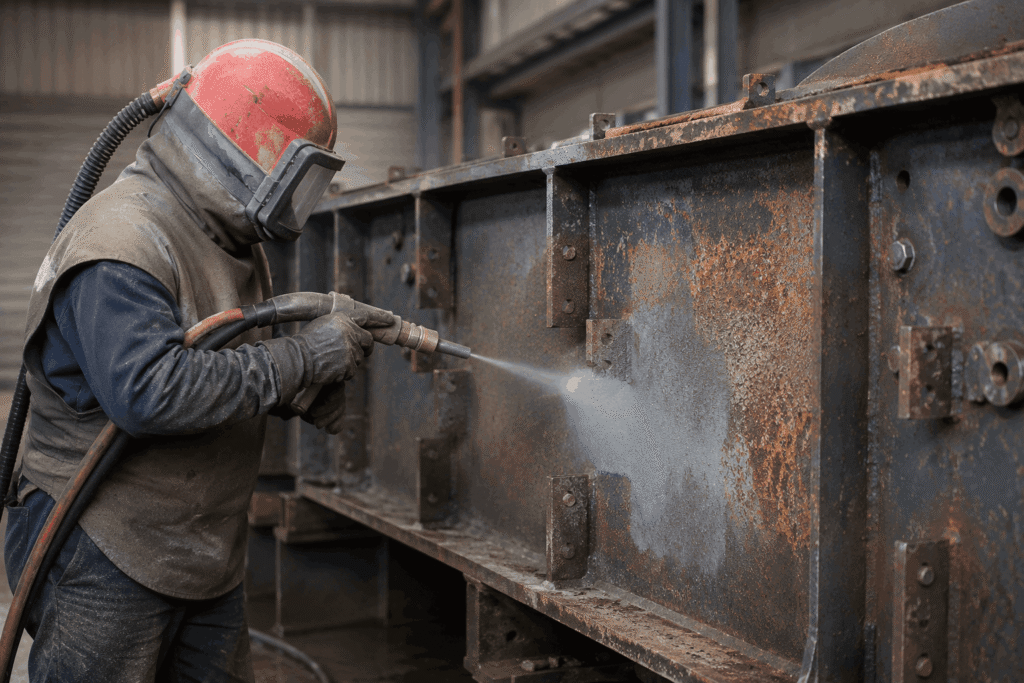
Surface contaminants, inconsistent profiles, and residual coatings create weak points that lead to premature breakdown. Industrial operations that overlook preparation standards often face repeated failures and rising maintenance costs. This is why controlled sandblasting in Calgary plays a critical role in preventing coating-related issues from the start.
1. Coating Peeling and Delamination Due to Weak Adhesion
Peeling and delamination are among the most visible signs of coating failure. These issues occur when coatings fail to bond properly with the substrate.
Without proper blasting, surfaces retain contaminants and lack the necessary profile for adhesion. Sandblasting creates a clean, roughened surface that allows coatings to anchor effectively, reducing the risk of separation over time.
2. Rust Bleeding Caused by Incomplete Contaminant Removal
Rust bleeding occurs when corrosion remains beneath the coating layer and gradually surfaces through the finish. This is often the result of incomplete cleaning prior to coating application.
Abrasive blasting removes rust, oxidation, and embedded contaminants, ensuring that the substrate is fully prepared. Sandblasting services in Calgary help eliminate hidden corrosion that would otherwise lead to early coating failure.
3. Premature Corrosion from Improper Surface Profile
Surface profile plays a critical role in coating performance. A surface that is too smooth prevents proper adhesion, while an inconsistent profile leads to uneven bonding.
Sandblasting creates a controlled anchor pattern that supports uniform coating application. This improves resistance to moisture penetration and reduces the likelihood of corrosion developing beneath the coating layer.
4. Coating Breakdown from Residual Oils, Grease, and Mill Scale
Industrial metal surfaces often contain oils, grease, and mill scale that are not visible to the naked eye. These contaminants interfere with coating adhesion and create weak points.
Blasting removes these substances and exposes clean metal, allowing coatings to bond effectively. Without this step, coatings are more likely to crack, blister, or fail under operational stress.
5. Uneven Coating Performance Due to Inconsistent Surface Conditions
Inconsistent surface conditions lead to uneven coating thickness and performance. Some areas may adhere properly, while others fail prematurely due to poor preparation.
Professional blasting ensures uniformity across the entire surface, including complex geometries and large components. This consistency is essential for achieving predictable coating performance in industrial environments.
6. Early Recoating Cycles That Increase Long-Term Costs
Coating failures often result in unplanned maintenance and recoating cycles. These disruptions increase operational costs and reduce asset availability.
Proper sandblasting minimizes the risk of early failure by establishing a strong foundation for coating application. This extends coating lifespan and reduces the frequency of maintenance interventions.
Preventing Failure with Proper Sandblasting and Surface Preparation
Coating performance is directly tied to the quality of preparation. Failures such as peeling, rust bleeding, and premature corrosion can be avoided through controlled blasting processes that ensure clean, properly profiled surfaces.
Professional Powder Coating delivers SSPC-compliant preparation and advanced coating systems designed to prevent failure and extend asset life. Contact Professional Powder Coating to reduce maintenance risks and achieve reliable protection with proven sandblasting solutions in Calgary.